


1 引言
随着智能电网的快速推进,智能变电站迅速崛起,光纤替换原有的二次电缆回路,其传输速率、信号容量以及数据共享均取得全面提升。模拟量经合并单元数字化转换后通过SV网上传至各保护装置,此过程中,CT极性直接决定着保护装置动作行为,尤以合并单元数据包置反最为隐蔽,需统一标准。线路、母线以及主变等保护与智能终端之间均通过GOOSE信号实现跳闸和启失灵,光纤替代传统电缆二次回路后使保护的动作逻辑和判别条件发生变化,失灵联跳、复压闭锁以及双母双分段的互启失灵均需作出调整。文章结合500kV智能变电站跳闸事故,通过比对常规站,对智能站重要失灵回路,动作原理进行详细剖析并提出合理的建议。
2 接线方式及保护动作情况
2.1 接线方式
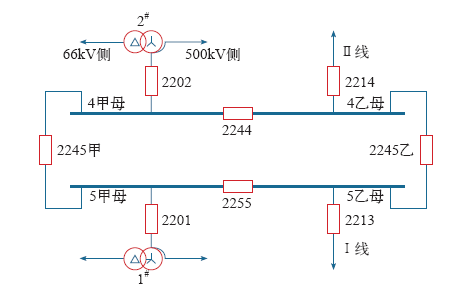
该智能站220kV中压侧为双母双分段接线方式,初期仅投入2个主变和2条线路,分别运行于4段母线上,其中自耦变500kV高压侧为3/2接线,低压等级为66kV,其主接线简化为如图1所示。
图1
2.2 保护动作情况
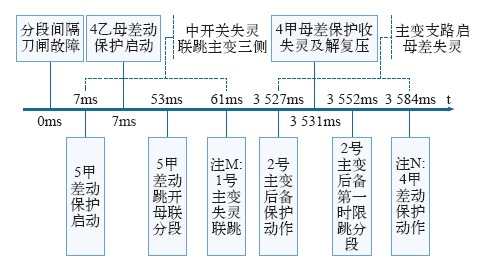
某500 kV智能站中压侧发生C相接地故障,4乙母差动保护瞬时启动但未动作;同时,5甲母差动保护动作并动作跳开其所在支路的母联2245甲和分段2255开关,1号主变收到中压侧失灵联跳三侧GOOSE命令并未动作(注M:实际未动作);3 527ms后2号主变后备保护动作,同时发送失灵及解除复压至4甲母线,于第一时限跳开分段2244开关,4甲母线收到主变支路启动母线差动保护失灵但未动作(注N:实际未动作)。由于5母差动和2号主变动作,造成中压侧全停,事故扩大,保护动作时序如图2所示。
图2
3 保护动作行为分析
变电站地处污染区,持续低温且为雨雪天气,强风致使分段间隔隔离开关短时间内覆冰严重,不断凝聚的冰柱和雨水冲刷后的地面造成2244-4乙断裂,形成断线接地故障。
3.1 4母线动作行为分析
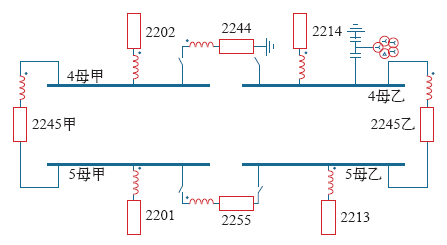
隔离开关断线接地,故障点在4乙母保护范畴,满足大差小差启动条件,但其所在母线CVT并未感受到接地后所产生的电压降低(其他分段母线均配置CVT),复压闭锁未被解除,故4乙母差保护启动但未动作。对于4甲母差保护而言,虽然解除复合电压闭锁,但属于区外故障,母线差动保护未启动。各CT配置和极性端如图3所示。
图3
3.2 5母线动作行为分析
2245甲母线联络开关CT为4甲、5甲母共用,因极性端在4甲母侧,差流计算时取正。相反,由于母线联络开关极性端背对5甲母,故进行差动计算时需对测量值进行取反,但2245甲合并单元在采集常规电流互感器从模拟量转换为数字量后,并非直接将整包上送至保护装置,而是分为两个数据进行上传,且在合并单元中对参与5甲母差动计算的数据进行取反,直接导致在5甲母小差逻辑计算中产生差流,造成母线差动保护误动。
图4
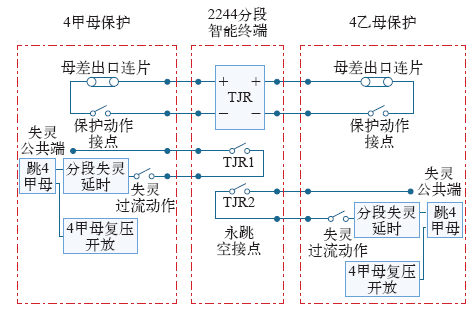
图4
常规双母双分段失灵回路
Fig.4
Conventional circuit double busbar double points of failure
3.3 主变动作行为分析
5甲母差动动作后,同时给1号主变发送中压侧失灵联跳信号,智能站主变失灵联跳逻辑异于常规站,其联跳三侧条件需再加自身有电流判据后方可执行,故主变仅启动未动作,假如满足过电流判别条件,则如时序图M所示,主变将联跳三侧开关。
由于故障电流一直存在,2号主变感知后延时启动后备保护,2号主变第一时限跳分段2244,故障点被隔离。主变后备动作同时,向4甲母线差动保护发出启动失灵及解除母线复压信号,但此时故障电流已切除,4甲母失灵未动作,若满足有电流判据,则如时序图N所示母线差动保护将动作跳闸。
4 保护动作原理及逻辑分析
4.1 分段开关的失灵分析
对于常规站,如图4所示,双母双分段4乙母发生故障,母线差动保护动作切除4乙母上所有支路,分段永跳TJR继电器带电后驱动空接点TJR1和TJR2闭合,一路返回自身,一路发至4甲母保护,当故障电流一直存在,失灵过流接点闭合,在解除复压闭锁情况下经一定延时后跳开4甲母上所有支路。
4甲启动5甲失灵:4甲发送TJR至分段操作箱,TJR继电器闭合后驱动两条回路,一路033返回至4甲用于起动自身失灵,另一路033送至5甲起动失灵。智能站可以按照此思路完成,即智能终端收到TJR令后分别返一个失灵至4、5甲,如若智能终端失电或者断线,将造成事故扩大。最好的解决办法是直接由4甲发送GOOSE命令至5甲以起动失灵,再由5甲加本地判据后选择是否动作。
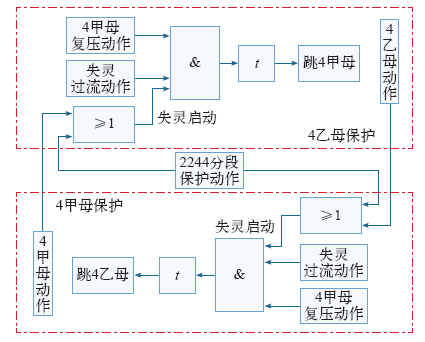
智能站和常规站的思路基本一致,并对失灵环节进行了改进。通过分析可知,4乙母故障,首先永跳分段开关,而后通过分段操作箱启动4甲失灵,在此过程中若智能终端失电或断线,可能造成分段开关不能跳闸且智能终端无法输出失灵信号至4甲母保护,扩大事故范围。图5中,智能站的母差一旦启动,立即通过光纤通道给另起一段母线发失灵信号,从而避开分段智能终端断电造成的拒动,同时为加强可靠性,分段保护也发送失灵至母线保护,加判据后失灵出口。
图5
4.2 失灵联跳分析
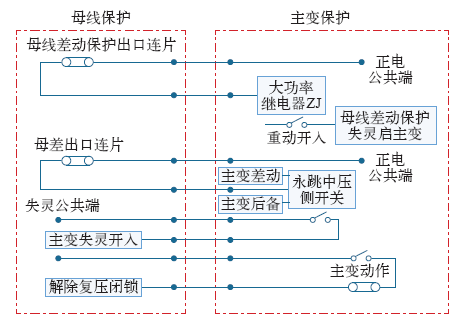
传统站母线差动保护动作后,输出三路动作信号,其中一路直跳中压侧开关,另双路同时进入主变,当主变收到双光格同时进入后认为确已失灵,将联跳主变三侧开关,双回路可以有效增强可靠性,防止主变误动。对于直跳回路,也有部分站采用单回路方式启动主变失灵,但由于直跳电缆过长,存在附加电容,叠加电压可能造成主变误动,故需要增加大功率继电器来重动主变三侧,强化可靠性。
主变动作后,永跳三侧开关,中压侧TJR继电器带电后驱动空接点闭合,导通启动母线差动保护失灵回路。如上所述,失灵保护动作后将解除母线复压闭锁,如若66kV低压侧发生故障,220kV中压侧母线一般不会出现复压动作,此种低压侧故障而中压侧失灵将造成中压侧母线复压闭锁灵敏度不够,无法动作,故需要主变动作的同时将接点接至母线差动保护用来解除复压闭锁,继而保证主变故障时动作跳闸。其母线差动保护和主变保护配合回路如图6所示。
图6
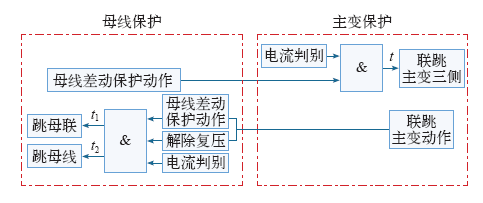
智能站中,直跳回路均通过光纤回路来完成,故母线差动保护发送至主变失灵三跳的信号不再经过大功率继电器重动,为保证可靠性,当母线差动保护保护动作接点通过失灵联跳送至主变保护装置后,经过装置内部固化灵敏的、无需整定的电流元件判别,延时后联跳变压器各侧断路器。为避免母线差动保护收到主变送来的失灵命令后,由于复压条件不满足而造成的拒动,需在主变动作后通过同一光纤通道给母线保护传送失灵及解除复压信号,再经电流判据后延时跳闸。其回路逻辑如图7所示。
图7
4.3 电流互感器极性分析
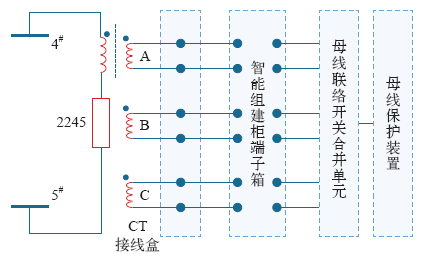
在该智能站的互感器配置中,一次设备仍然选择常规CT,如图8所示。经二次转换后通过CT接线盒引至智能组件柜端子箱,而后进入合并单元模拟量转化为数字量,通过SV再传送至母线保护装置。
图8
智能站投产初期负荷较少,每条母线上仅带一条支路,由于潮流平衡,母线联络开关上几乎无电流通过,母线差动保护感受不到差流。当故障发生,2245甲母线联络开关流过大电流,母线联络开关合并单元输送的置反电流在计算过程中直接造成5甲母出现差流,误动作跳闸。分析可知,单CT方式的母线保护在进行差流逻辑计算中需要对其中的一路小差进行取反,该故障主要原因是合并单元和母线保护中对母线联络开关电流同时置反造成了差流。当模拟量极性需要置反时,在CT安装接线盒、智能组件柜端子箱、合并单元以及保护装置均可实现,随着智能站运行经验提升,实践证明,通过保护装置来实现极性的取反更为合理、可靠。
5 设计方案改进及建议
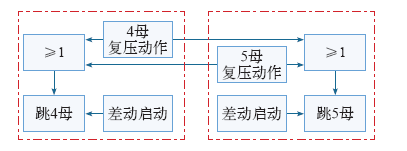
通过分析,当分段开关发生断线且接地故障,两段母线保护均不动作跳闸,故障无法切除,造成事故扩大。其主要原因为母线保护所引入的复合电压未能开放,故需要在任一母线差动保护动作后向另一段母线发送电压开放信号,保证此类故障可靠动作,如图9所示。
图9
互感器的极性直接影响着保护装置的动作行为,在采样过程中,智能站通过合并单元将模拟量转换为数字量并利用SV网传输至各保护装置,由于合并单元对数据包的置反十分隐蔽且有较大隐患,建议对CT的极性置反均在保护装置中来完成。
参考文献
数字化变电站的主要特征和关键技术
[J].The construction of digital substations is the foundation of digital power grids. In view of technical basis of digital substation at present, the authors analyze main technical features reflecting the property of digital substation and point out that the non-conventional instrument transformer, the reliability of network communication, IED interoperability, time synchronization and information security are key technologies to implement digital substation. Finally the technical and economical significance of these new technologies are summarized.
Main features and key technologies of digital substation
[J].The construction of digital substations is the foundation of digital power grids. In view of technical basis of digital substation at present, the authors analyze main technical features reflecting the property of digital substation and point out that the non-conventional instrument transformer, the reliability of network communication, IED interoperability, time synchronization and information security are key technologies to implement digital substation. Finally the technical and economical significance of these new technologies are summarized.
全数字化保护系统的可靠性及元件重要度分析
[J].从总体可靠度和元件重要度两个方面对全数字化保护系统的可靠性进行研究。基于可靠性框图和邻接矩阵方法建立了总体可靠性模型,然后基于概率重要度和关键重要度,建立了全数字化保护系统元件重要度评价指标。其中,概率重要度用于发现系统中的薄弱环节,以指导和优化系统设计;关键重要度用于指导系统维修。为说明所提方法的有效性,提出了6种全数字化保护系统的典型结构,并利用上述方法,对其进行了详细的计算与分析。
Analysis of reliability and component importance for all-digital protective systems
[J].从总体可靠度和元件重要度两个方面对全数字化保护系统的可靠性进行研究。基于可靠性框图和邻接矩阵方法建立了总体可靠性模型,然后基于概率重要度和关键重要度,建立了全数字化保护系统元件重要度评价指标。其中,概率重要度用于发现系统中的薄弱环节,以指导和优化系统设计;关键重要度用于指导系统维修。为说明所提方法的有效性,提出了6种全数字化保护系统的典型结构,并利用上述方法,对其进行了详细的计算与分析。
A platform for smart substations
[J].
220 kV 典型保护死区问题的探讨
[J].DOI:10.7667/j.issn.1674-3415.2010.13.029 URL
Discussionabout the problem of 220 kV typical protection’s dead-zone
[J].DOI:10.7667/j.issn.1674-3415.2010.13.029 URL
消除变压器盲区故障的继电保护方法
[J].DOI:10.7667/j.issn.1674-3415.2010.01.030 URL
Methods of relay protection on eliminating blind fault of transformer
[J].DOI:10.7667/j.issn.1674-3415.2010.01.030 URL
高压电网防保护死区电流互感器保护绕组的配置及反措
[J].
DOI:10.7667/j.issn.1674-3415.2010.05.031
URL
PMID:31891233

Plant traits-the morphological, anatomical, physiological, biochemical and phenological characteristics of plants-determine how plants respond to environmental factors, affect other trophic levels, and influence ecosystem properties and their benefits and detriments to people. Plant trait data thus represent the basis for a vast area of research spanning from evolutionary biology, community and functional ecology, to biodiversity conservation, ecosystem and landscape management, restoration, biogeography and earth system modelling. Since its foundation in 2007, the TRY database of plant traits has grown continuously. It now provides unprecedented data coverage under an open access data policy and is the main plant trait database used by the research community worldwide. Increasingly, the TRY database also supports new frontiers of trait-based plant research, including the identification of data gaps and the subsequent mobilization or measurement of new data. To support this development, in this article we evaluate the extent of the trait data compiled in TRY and analyse emerging patterns of data coverage and representativeness. Best species coverage is achieved for categorical traits-almost complete coverage for 'plant growth form'. However, most traits relevant for ecology and vegetation modelling are characterized by continuous intraspecific variation and trait-environmental relationships. These traits have to be measured on individual plants in their respective environment. Despite unprecedented data coverage, we observe a humbling lack of completeness and representativeness of these continuous traits in many aspects. We, therefore, conclude that reducing data gaps and biases in the TRY database remains a key challenge and requires a coordinated approach to data mobilization and trait measurements. This can only be achieved in collaboration with other initiatives.
Configuration scheme of current transformer coils used by protections and measures against dead zone in high
[J].
DOI:10.7667/j.issn.1674-3415.2010.05.031
URL
PMID:31891233
Plant traits-the morphological, anatomical, physiological, biochemical and phenological characteristics of plants-determine how plants respond to environmental factors, affect other trophic levels, and influence ecosystem properties and their benefits and detriments to people. Plant trait data thus represent the basis for a vast area of research spanning from evolutionary biology, community and functional ecology, to biodiversity conservation, ecosystem and landscape management, restoration, biogeography and earth system modelling. Since its foundation in 2007, the TRY database of plant traits has grown continuously. It now provides unprecedented data coverage under an open access data policy and is the main plant trait database used by the research community worldwide. Increasingly, the TRY database also supports new frontiers of trait-based plant research, including the identification of data gaps and the subsequent mobilization or measurement of new data. To support this development, in this article we evaluate the extent of the trait data compiled in TRY and analyse emerging patterns of data coverage and representativeness. Best species coverage is achieved for categorical traits-almost complete coverage for 'plant growth form'. However, most traits relevant for ecology and vegetation modelling are characterized by continuous intraspecific variation and trait-environmental relationships. These traits have to be measured on individual plants in their respective environment. Despite unprecedented data coverage, we observe a humbling lack of completeness and representativeness of these continuous traits in many aspects. We, therefore, conclude that reducing data gaps and biases in the TRY database remains a key challenge and requires a coordinated approach to data mobilization and trait measurements. This can only be achieved in collaboration with other initiatives.
A vision of smart transmission grids
[C].
IEC 61850: Open Communication in Practice in Substations
[C].


